
A silk saree that stays with you for decades – passed down, brought out for weddings, and remembered in photographs. But with so many silk weaves to choose from, each with its own history, texture, and price point, buying one can feel overwhelming. This guide breaks down three of India’s most loved silk sarees – Kanjivaram, Banarasi, and Tussar – so you know exactly what you’re paying for and which one suits your occasion.
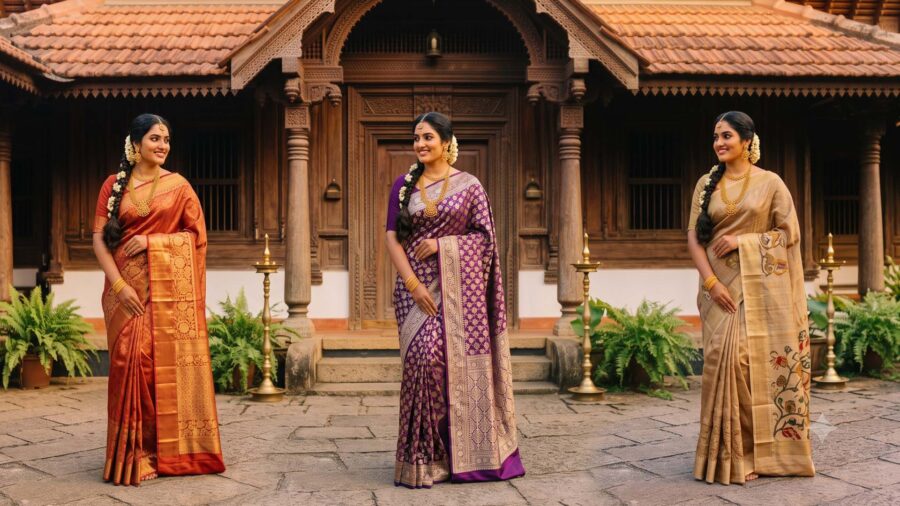
1. Kanjivaram Silk Saree
Origin: Kanchipuram, Tamil Nadu
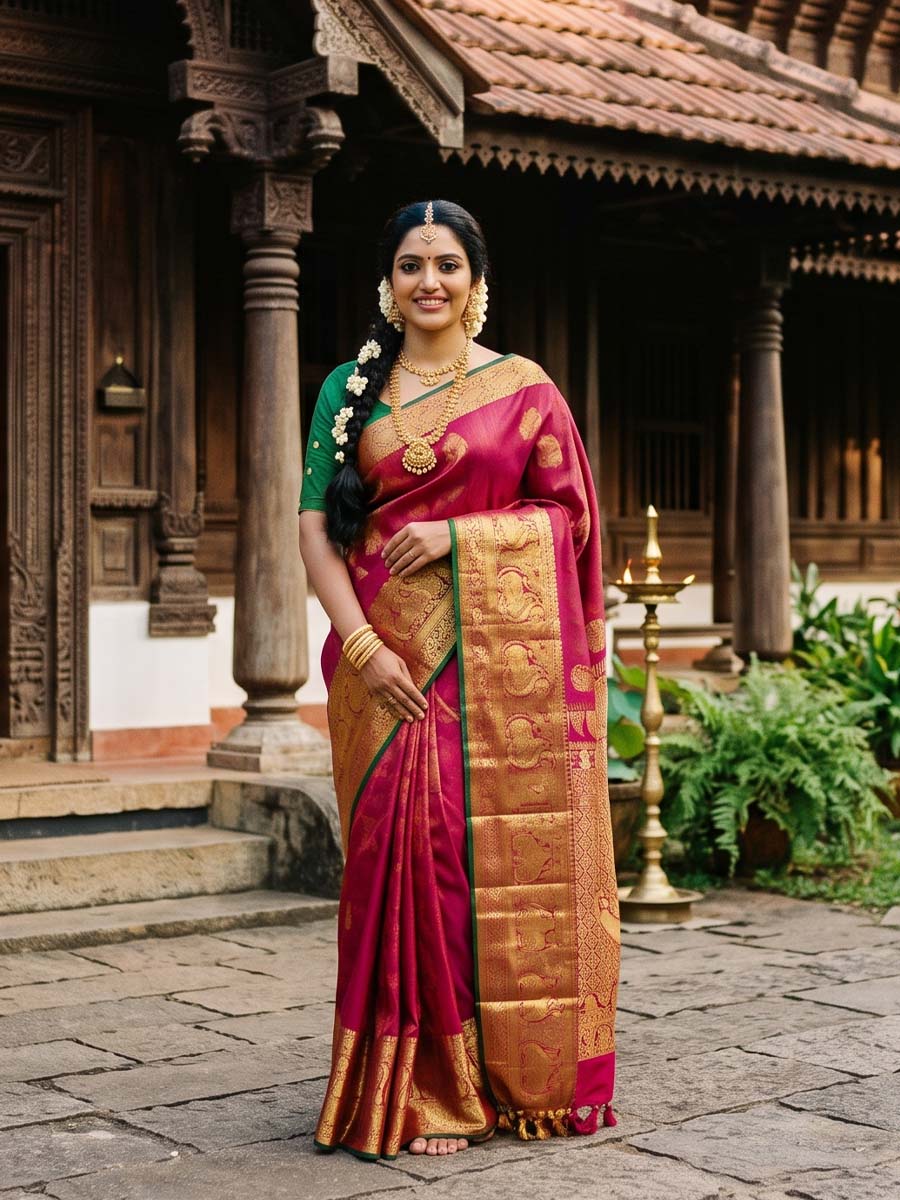
Kanjivaram (or Kanchipuram) sarees are known as the “Queen of Silks” in South India. They’re woven using mulberry silk that’s thicker and heavier than most other silk varieties, giving the saree its signature stiffness and durability.
What to look for:
- Zari work: Genuine Kanjivaram sarees use real or high-quality zari (gold/silver thread) woven into the border and pallu. Rub a small corner gently — real zari won’t fade or flake.
- Contrast borders: A hallmark of Kanjivaram is the contrasting color between the body and the border, joined using a special “korvai” technique where you can see a zig-zag interlocking pattern on the reverse side.
- Weight and texture: These sarees are heavy (often 600g–1kg) and have a slightly stiff, rich feel — not flowy like chiffon or georgette.
- Price range: ₹5,000 for machine-blended pieces to well over ₹1,00,000 for pure silk with heavy zari.
Best for: Weddings, engagement ceremonies, and traditional South Indian functions where richness and structure matter.
2. Banarasi Silk Saree
Origin: Varanasi (Banaras), Uttar Pradesh
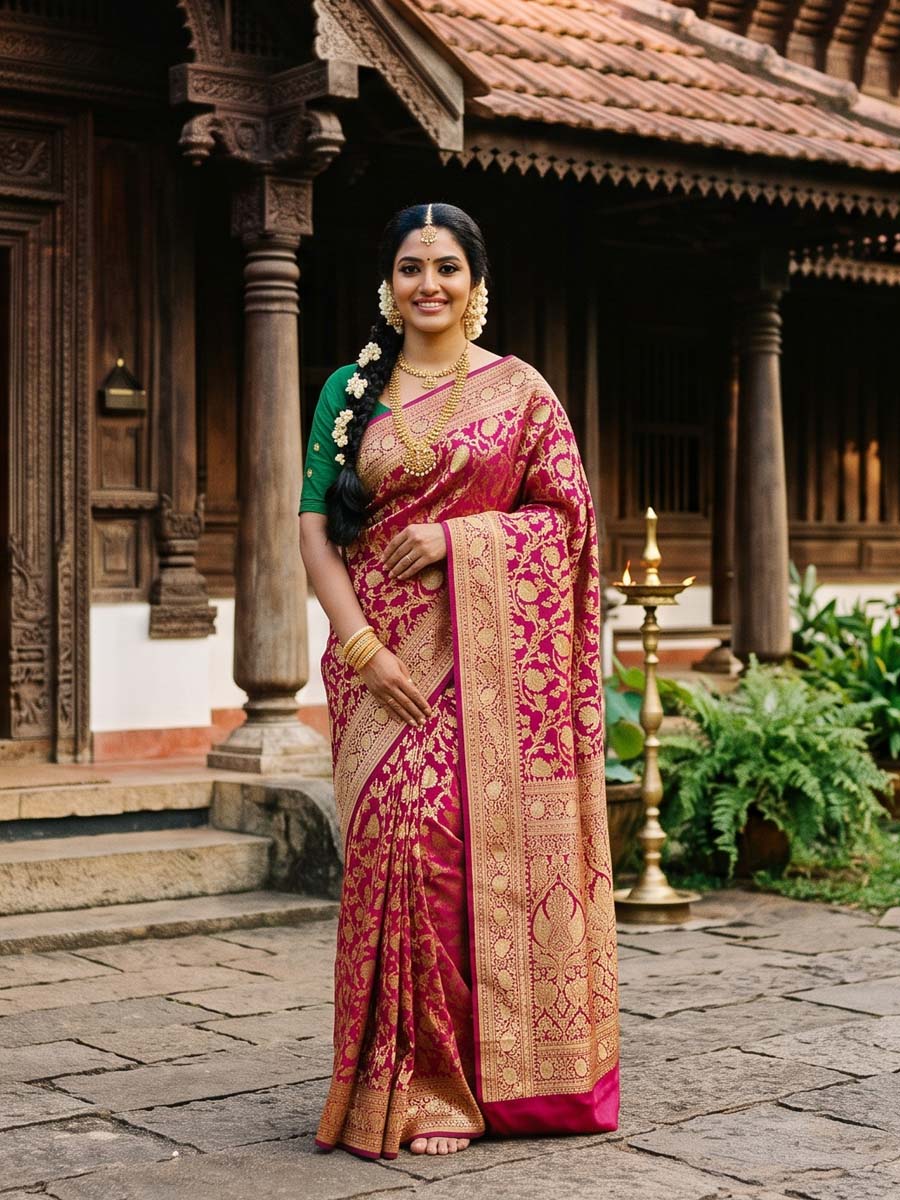
Banarasi sarees are famous for intricate brocade work inspired by Mughal-era motifs — florals, paisleys, and delicate jaal (net) patterns woven directly into the fabric rather than embroidered on top.
What to look for:
- Type of Banarasi: There are several varieties — Katan (pure silk), Organza (Kora), Georgette, and Shattir. Katan Banarasi is the purest and most valuable.
- Handwoven vs. power loom: Handwoven Banarasi sarees have tiny irregularities in the weave and take weeks to months to complete, which is reflected in the price. Power loom versions look similar but lack the same finesse and longevity.
- Motifs: Look for traditional buttis (small motifs), kalga-bel (paisley vine borders), and a dense, intricate pallu — these are signs of authentic craftsmanship.
- Feel: Banarasi silk drapes more softly than Kanjivaram, with a lustrous sheen.
- Price range: ₹3,000–₹8,000 for georgette/blended versions, ₹15,000–₹1,00,000+ for pure Katan silk with real zari.
Best for: Weddings (especially North Indian bridal wear), receptions, and festive occasions where you want opulence with a softer drape.
3. Tussar Silk Saree
Origin: Jharkhand, Chhattisgarh, West Bengal, and parts of Odisha
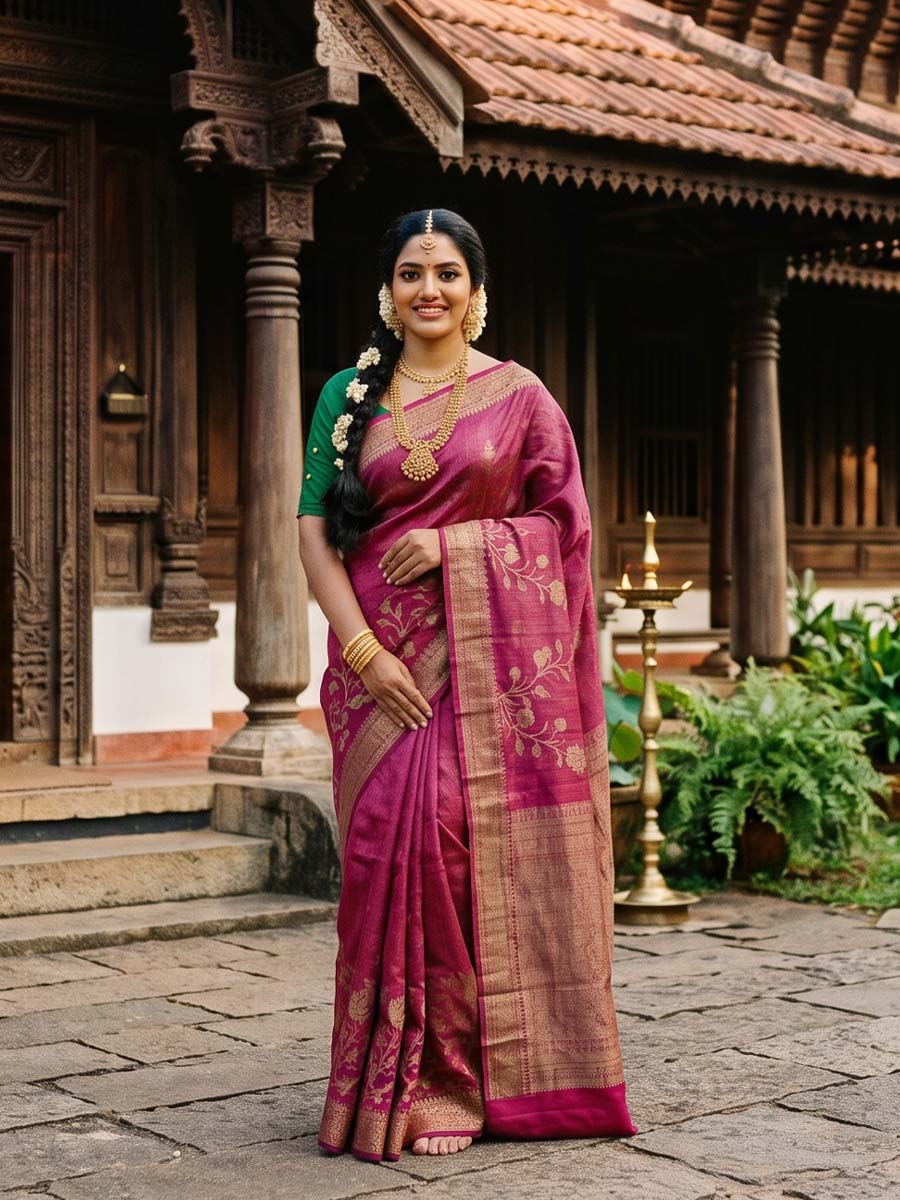
Tussar (also spelled Tusar or Tussore) is a wild silk, meaning the silkworms feed on forest trees rather than mulberry leaves. This gives the fabric its natural, slightly deeper golden or beige tone and a distinctive textured, matte finish.
What to look for:
- Natural texture: Tussar has a coarser, more textured feel compared to the smooth sheen of Kanjivaram or Banarasi — this is normal and part of its charm, not a flaw.
- Natural color base: Genuine Tussar has a warm, earthy undertone (rather than stark white) since it isn’t bleached like mulberry silk.
- Prints and embroidery: Tussar is a popular base for hand-block prints, Kalamkari, and light embroidery because the matte surface holds designs beautifully.
- Weight: Lighter and more breathable than Kanjivaram or Banarasi, making it comfortable for long wear.
- Price range: ₹2,000–₹6,000 for simple prints, ₹8,000–₹25,000+ for detailed embroidery or Kalamkari work.
Best for: Office wear, casual festive days, day functions, and anyone who wants an elegant, understated silk saree without heavy embellishment.
Quick Buying Tips (For All Three)
- Burn test: A small thread pulled from the fabric’s edge, when burnt, should smell like burning hair and leave ash (not melt like plastic) — this confirms it’s genuine silk, not synthetic.
- Buy from certified sources: Look for the Silk Mark tag, a government-backed certification of purity for Indian silk sarees.
- Check the blouse piece: Most silk sarees come with an attached blouse piece — check the fabric and length match the saree.
- Ask about zari: “Pure zari” (real gold/silver coated) is more expensive than “tested zari” (silver-coated) or “art silk zari” (synthetic). Always ask which one you’re getting.
Conclusion: Which Silk Saree Is Right for You?
| Occasion | Recommended Saree | Why |
| Wedding (bride/close family) | Kanjivaram or Katan Banarasi | Rich zari work, structured drape, heirloom quality |
| Reception or festive party | Banarasi (Georgette/Organza) | Lightweight yet opulent, easier to drape and dance in |
| Office or daytime event | Tussar | Breathable, elegant, understated |
| Puja or traditional ceremony | Kanjivaram | Traditional South Indian symbolism, durability |
| Casual festive day | Printed Tussar | Comfortable, stylish, budget-friendly |
| Gifting (mother/mother-in-law) | Banarasi or Kanjivaram | Timeless, high perceived value |
There’s no single “best” silk saree — the right choice depends on the occasion, your comfort with weight and drape, and your budget. If you want one saree that can do double duty for both weddings and festive parties, a mid-weight Banarasi is often the safest bet. If durability and heirloom value matter most, invest in a Kanjivaram. And if you want something elegant for everyday festive wear, Tussar won’t disappoint.
Frequently Asked Questions
1. Which silk saree lasts the longest? Kanjivaram sarees are known for the best longevity due to the thick, high-quality mulberry silk used — many last for generations with proper care.
2. Is Tussar silk considered “pure silk”? Yes, Tussar is 100% natural silk, just from a different (wild) silkworm species than mulberry silk used in Kanjivaram and Banarasi. It’s sometimes called “vanya silk.”
3. How do I store silk sarees to prevent damage? Wrap them in a soft muslin or cotton cloth (avoid plastic, which traps moisture), store away from direct sunlight, and refold along different lines every few months to prevent permanent creases.
4. Can I dry-clean silk sarees at home? It’s best to dry-clean silk sarees professionally, especially those with zari work, since real zari can tarnish with water or harsh detergents. Simple Tussar sarees without zari can sometimes be gently hand-washed with mild silk-safe detergent.
5. Why is Kanjivaram silk more expensive than Banarasi? It depends on the specific piece, but Kanjivaram generally uses heavier silk and denser zari, and the korvai weaving technique is labor-intensive — all of which drive up cost. However, a heavily worked pure Katan Banarasi can cost just as much or more.
6. What’s the difference between “art silk” and “pure silk”? Art silk (artificial silk) is typically made from rayon or a silk-polyester blend and costs a fraction of pure silk. It looks similar but lacks the sheen, drape, and durability of genuine mulberry or Tussar silk. Always ask for a Silk Mark certification if you want guaranteed purity.
7. Which saree is best for a first-time silk saree buyer? Tussar is a great starting point — it’s more affordable, versatile, and forgiving in terms of care, letting you get comfortable with silk sarees before investing in a heavier Kanjivaram or Banarasi.