
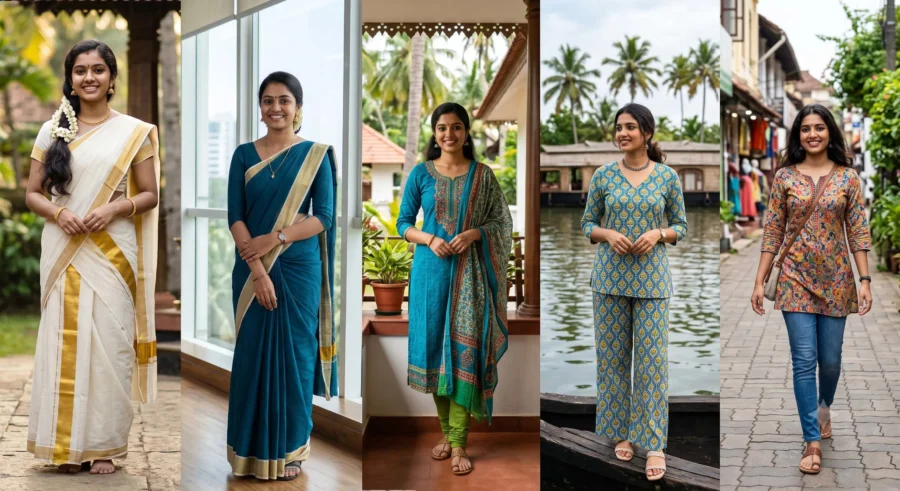
Walk through the streets of Kochi, Thiruvananthapuram, or Kozhikode today and you’ll see something interesting happening — a wardrobe revolution that’s quietly rewriting what it means to dress “Kerala style.” The state’s youth haven’t abandoned tradition; they’ve remixed it. Here’s a look at how six wardrobe staples — from the humble Set Mundu to the trendy Co-Ord set — are telling the story of this shift.
Set Mundu: The Original Kerala Classic
The Set Mundu — that crisp, off-white two-piece with the signature golden kasavu border — is arguably the most iconic garment to come out of Kerala. Traditionally worn during Onam, Vishu, weddings, and temple visits, it has always represented elegance in simplicity.
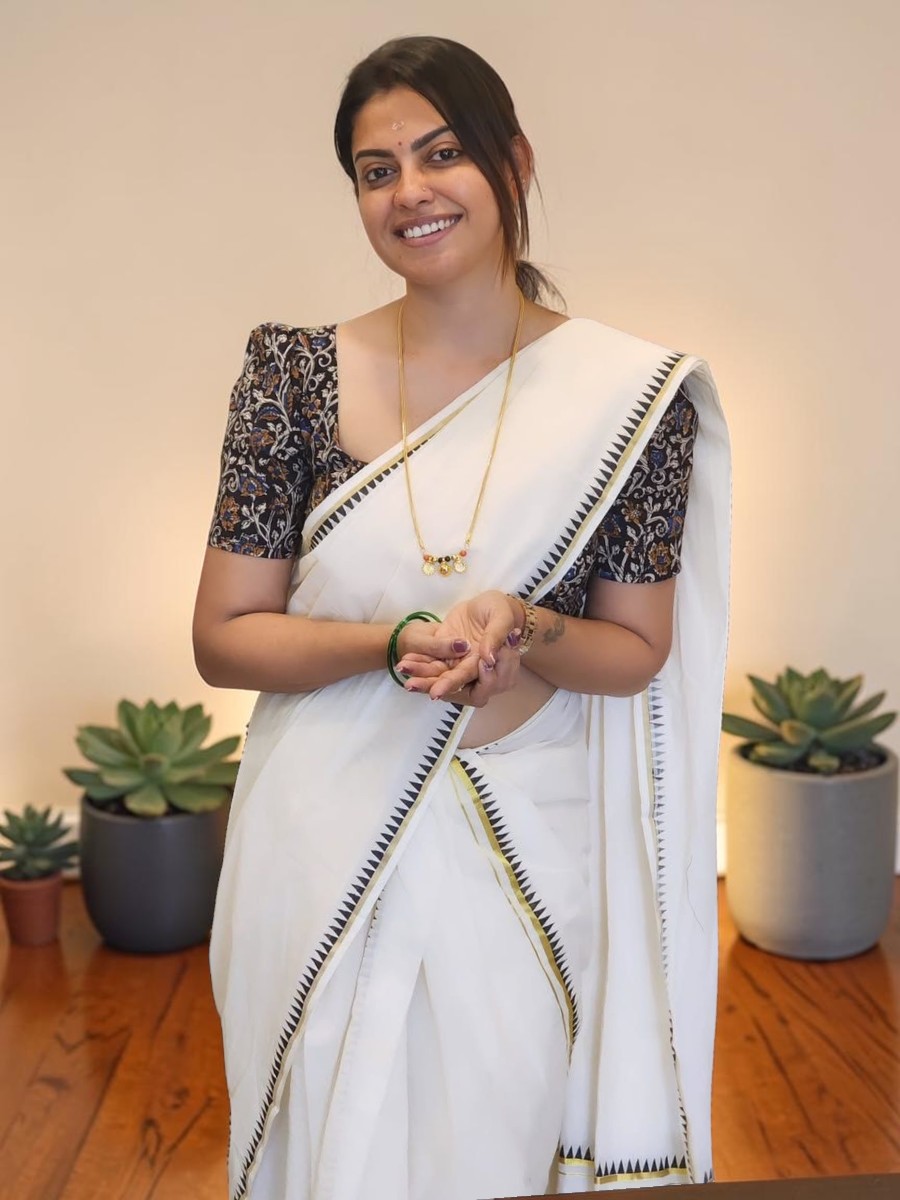
What’s changed isn’t the garment itself, but who’s wearing it and how. Young women are pairing their Set Mundu with statement blouses, quirky jewelry, and even sneakers for a fusion look at cultural events. Designers are experimenting with pastel kasavu borders, block prints, and lighter fabrics that make the traditional two-piece wearable beyond festival season. What was once “occasion wear” is slowly becoming a style choice.
Saree: Reinvented, Not Retired
The saree in Kerala has never really gone away, but its role has shifted dramatically. A generation ago, it was everyday wear for working women. Today, among the youth, it’s become a canvas for creative expression — pre-stitched sarees, dhoti-style drapes, ruffle sarees, and Instagram-famous “saree with a crop top” combinations are everywhere.
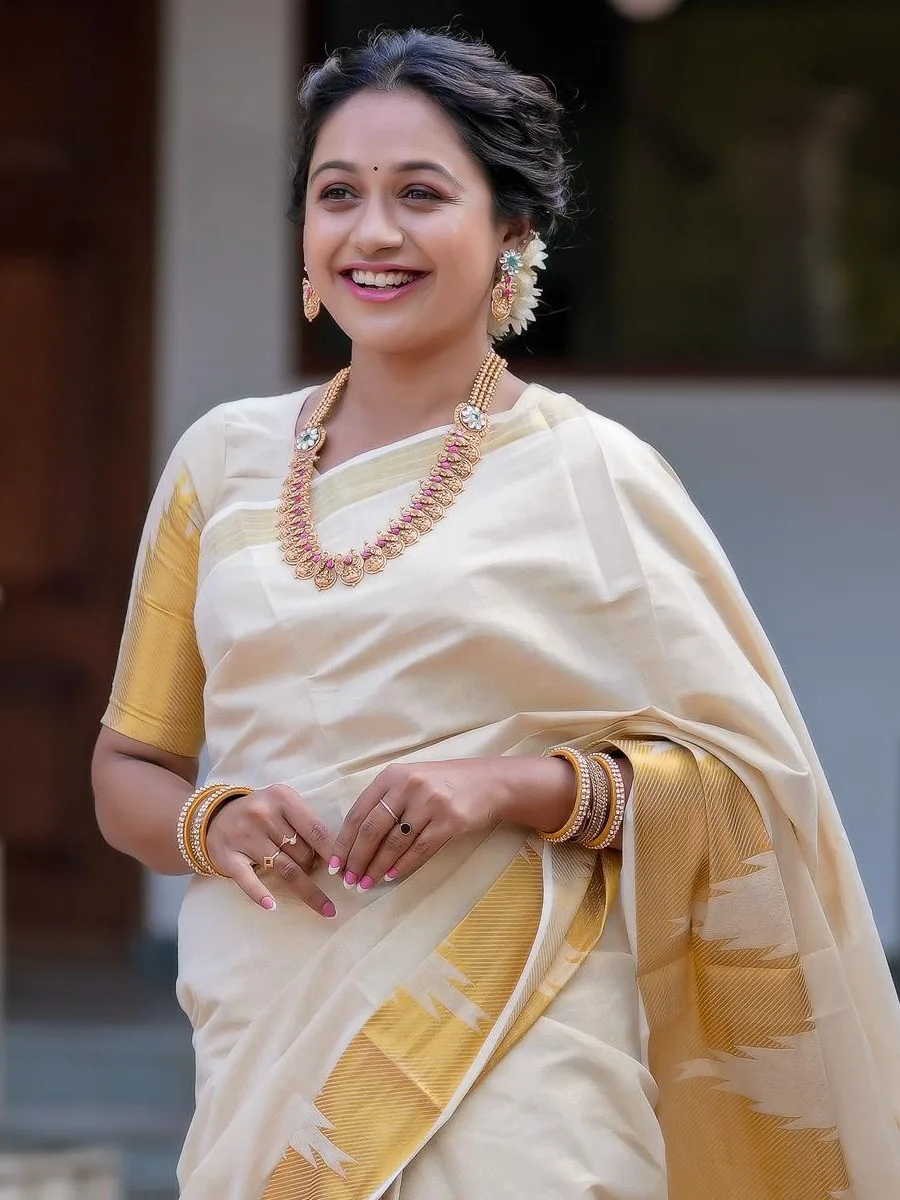
College fests, pre-wedding shoots, and Onam celebrations have become the saree’s new stage. Young Malayali women are treating the six yards not as a chore to master but as a style statement to customize — proof that heritage garments can thrive when given room to evolve.
Churidar Set: The Everyday Favorite
If there’s one outfit that has stayed a genuine daily-wear staple across generations, it’s the churidar set (often called chudidar locally). Comfortable, modest, and versatile, it remains a go-to for college students, working professionals, and homemakers alike.
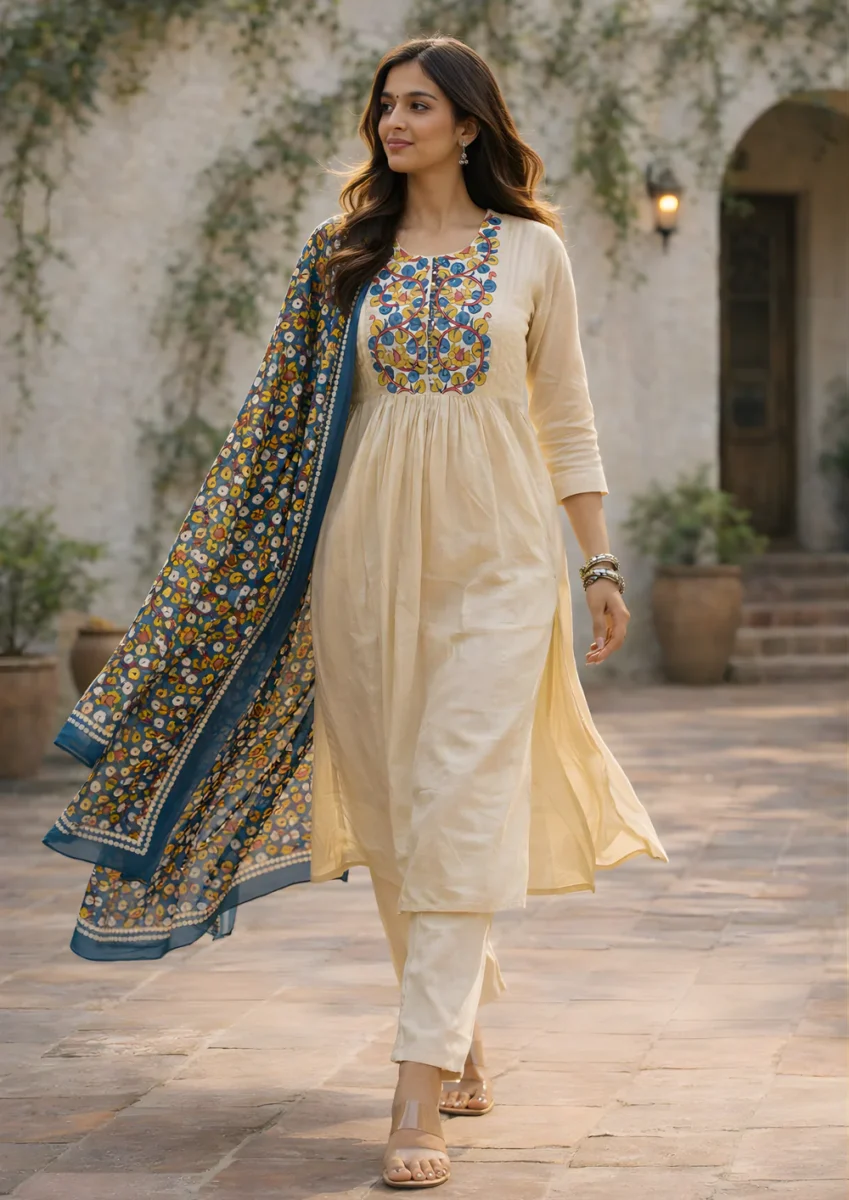
What’s new is the styling — shorter kurtas paired with palazzo-style churidars, asymmetric hemlines, high-low kurtas, and minimalist prints replacing the heavily embroidered designs of the past. The dupatta, once mandatory, is now optional or worn more like an accessory — draped over one shoulder or tied around the waist. It’s tradition with a contemporary edit.
Co-Ord Set: The New Favorite on the Block
Few trends have caught on with Kerala’s Gen Z quite like the co-ord set — matching top-and-bottom combinations in linen, cotton, or rayon that work equally well for a café hangout or a semi-formal outing. Its appeal lies in effortlessness: no calculation of what matches what, just a put-together look in one purchase.
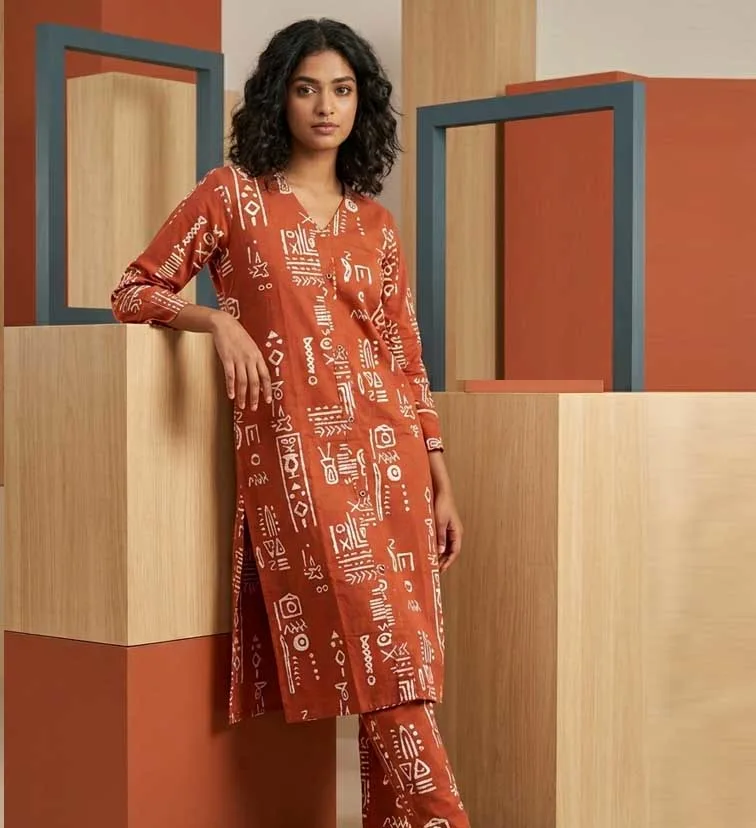
Local boutiques and homegrown Instagram brands across Kerala have jumped on this trend, often infusing it with regional touches — ikkat prints, kasavu-inspired trims, or handloom fabric sourced from within the state. It’s a great example of a global fashion trend being localized rather than simply imported.
Short Kurta: Comfort Meets Casual Cool
The short kurta — paired with jeans, leggings, or even shorts — has become the unofficial uniform of Kerala’s college campuses. It strikes a balance that resonates strongly with youth: modest enough to feel culturally appropriate, casual enough for everyday comfort, and easy to dress up or down.
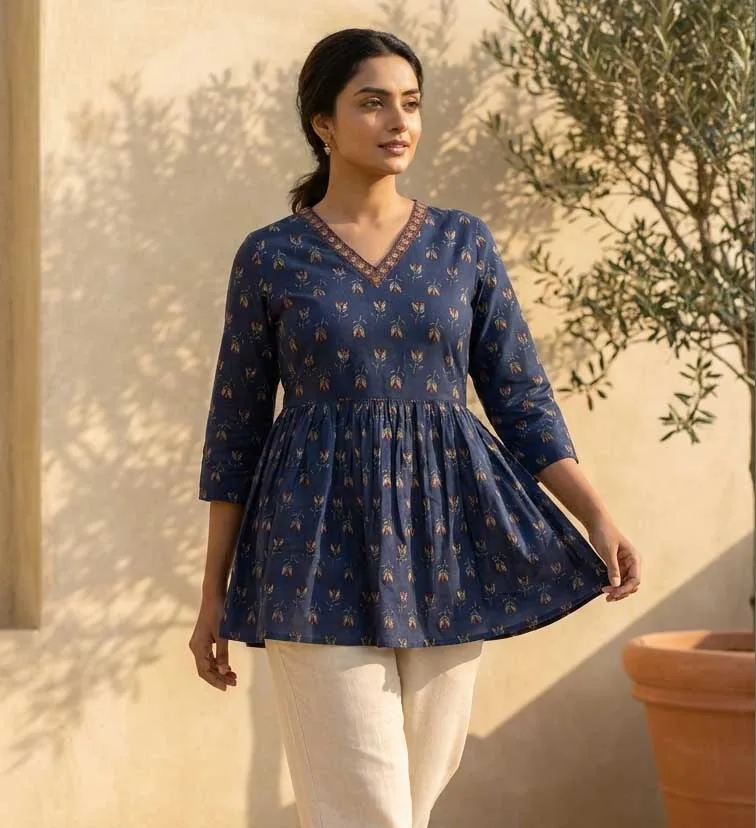
Unlike the traditional full-length kurta, the shorter cut feels distinctly modern, often styled with statement earrings, sling bags, and sneakers. It’s become a bridge piece — ethnic enough to feel rooted, casual enough to feel current.
The Bigger Picture: An Evolution, Not a Departure
What ties all these garments together is a larger cultural shift happening across Kerala. Today’s youth aren’t rejecting tradition in favor of Western wear, nor are they clinging rigidly to old norms. Instead, they’re doing something more interesting: blending both.
A few forces are driving this evolution:
- Social media exposure — Instagram and Pinterest have turned young Malayalis into style curators, borrowing silhouettes from across India and the world while keeping local textiles and motifs alive.
- Homegrown fashion labels — A wave of Kerala-based designers and small businesses are reworking kasavu, handloom cotton, and regional weaves into modern silhouettes like co-ord sets and short kurtas.
- Practicality — Kerala’s climate demands breathable, easy-to-maintain fabrics, which is why cotton and linen remain at the heart of even the trendiest new styles.
- Cultural pride with flexibility — Festivals and weddings still call for the Set Mundu or saree, but everyday life has room for churidars, co-ords, and kurtas that move with a busier, more mobile generation.
Final Thoughts
Kerala’s dressing culture today isn’t a tug-of-war between “traditional” and “modern” — it’s a conversation between the two. The Set Mundu still commands respect at an Onam celebration, the saree still turns heads at a wedding, and the churidar remains a trusted daily companion — but now they share wardrobe space with co-ord sets and short kurtas that reflect a generation comfortable moving between worlds.
If anything, this evolution proves that tradition doesn’t have to be static to survive. In Kerala, it’s being worn, reworked, and reimagined — one outfit at a time.