
The Complete Guide to Traditional Kerala Sarees
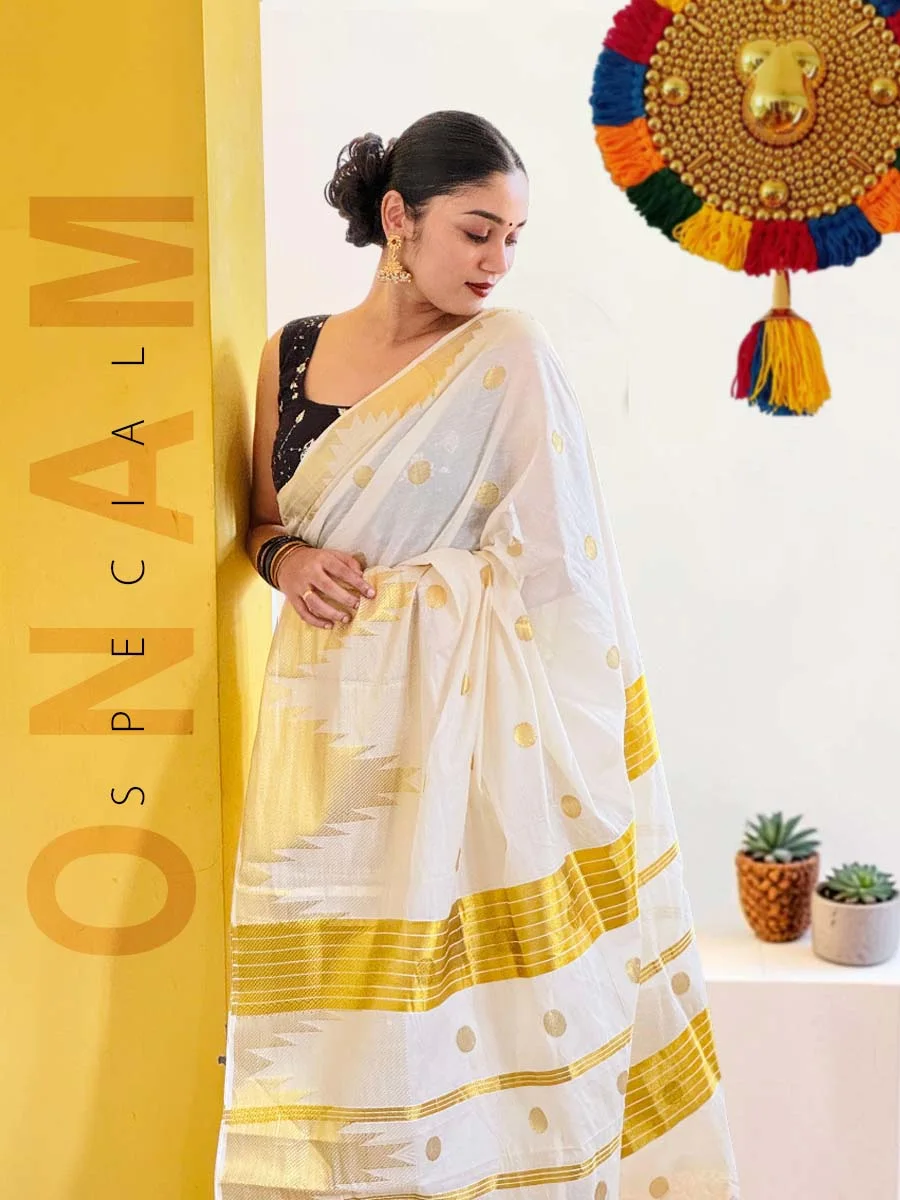
Onam isn’t just a festival — it’s a feeling. The scent of fresh jasmine, the vibrant hues of a Pookalam and the rustle of a crisp, gold-bordered saree makes our Onam celebrations something special.
1. What Makes Onam Sarees So Special?
Onam sarees are more than just clothing, they’re a celebration of Kerala’s identity woven into fabric. Here’s what sets them apart:
The Classic Off-White and Gold Palette
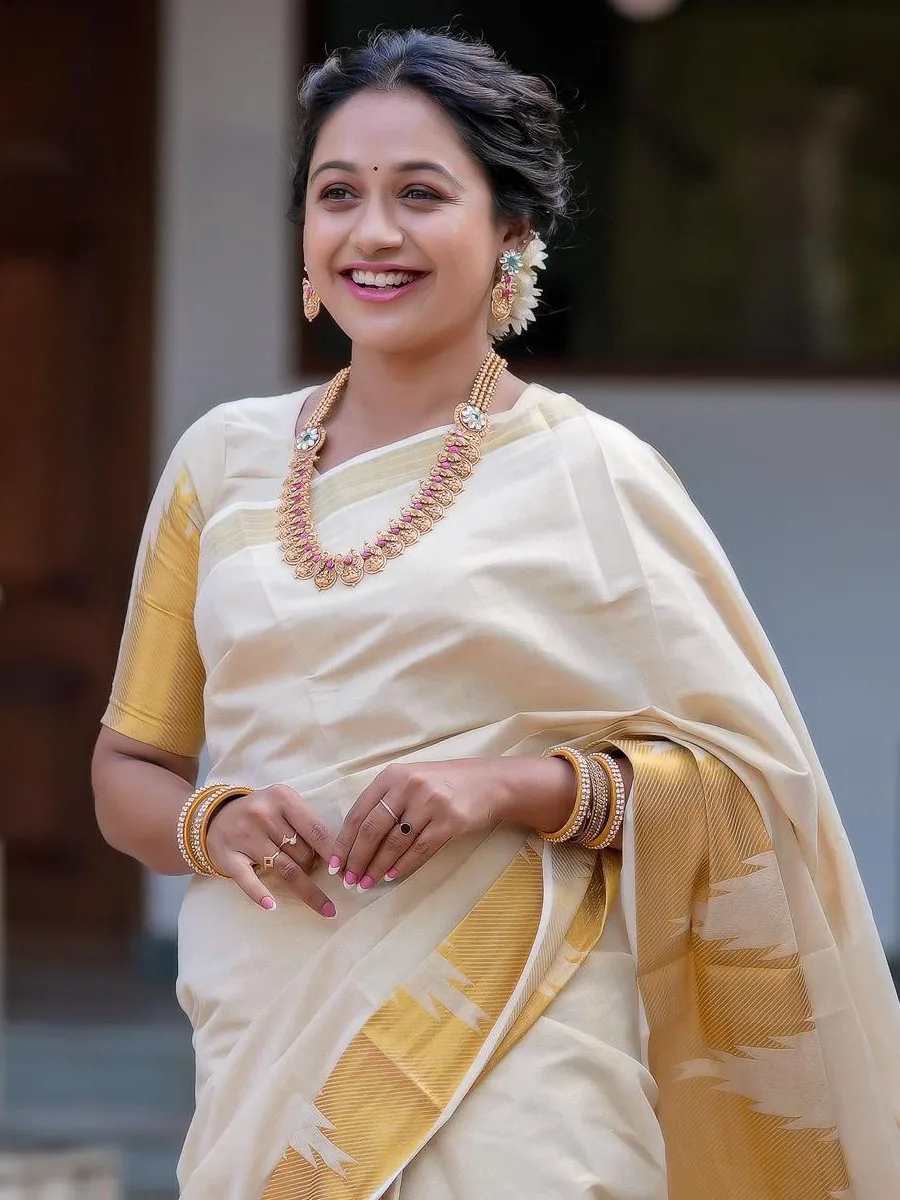
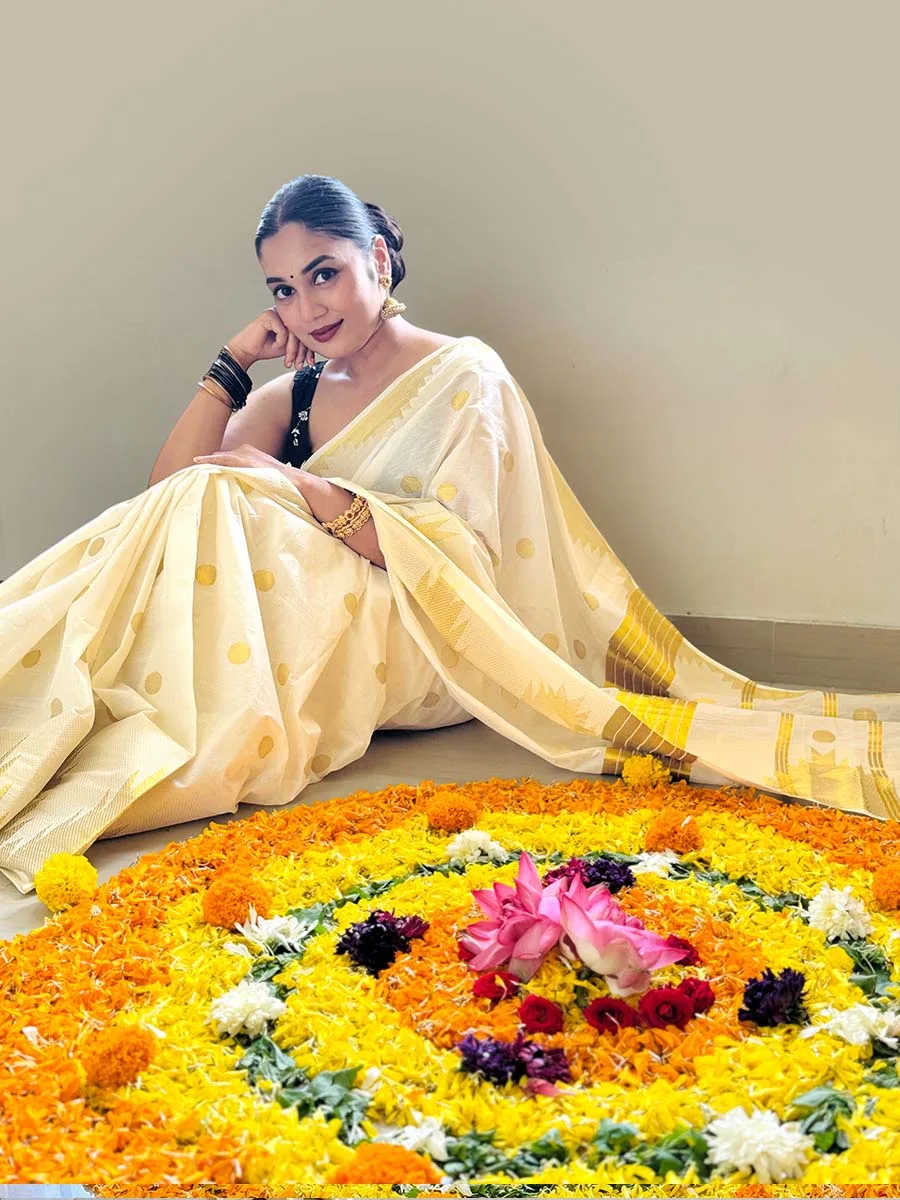
The signature look of Onam is the off-white (cream) base with a golden “Kasavu” border. This isn’t a random styling choice – the unbleached cotton represents purity and simplicity, while the gold sari border symbolizes prosperity, echoing the spirit of the harvest season.
Handloom Heritage
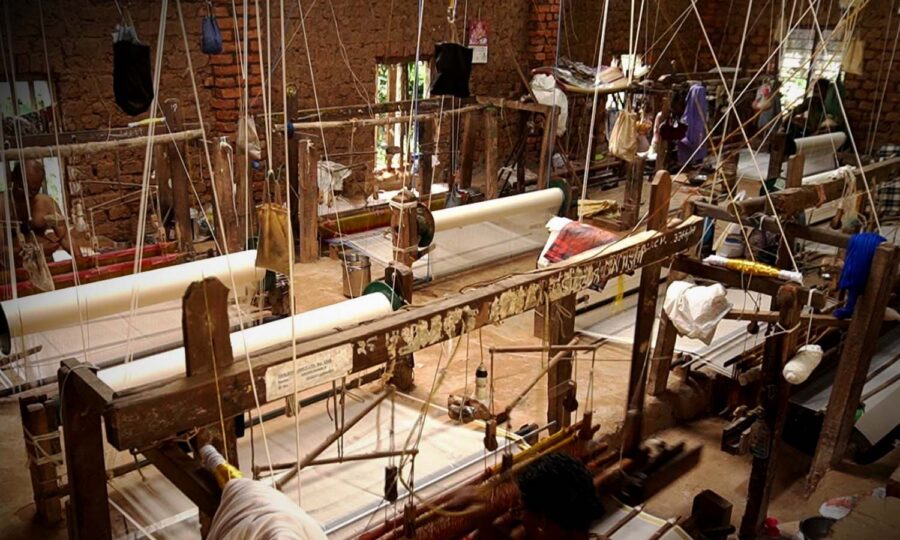
Many Onam sarees are still handwoven by artisans in weaving clusters like Balaramapuram, Chendamangalam, and Kuthampully. Each saree carries the mark of traditional craftsmanship passed down through generations, making it as much a piece of art as it is attire.
Breathable, Festival-Ready Comfort
Kerala’s warm and humid climate calls for lightweight, breathable fabrics. Traditional Onam sarees are made from pure cotton, which keeps you comfortable through long hours of festivities, feasts, and dance performances.
Symbolic of Culture and Togetherness
Wearing a Kasavu saree during Onam is a way of honoring Kerala’s traditions. It’s common to see entire families – women in Kasavu sarees and men in Mundu – dressed in coordinated, traditional attire, reinforcing the festival’s spirit of unity and heritage.
Versatile Elegance
The minimalist gold-on-white design makes these sarees timeless. They pair beautifully with temple jewellery, jasmine flowers, and traditional hairstyles, yet feel understated enough to be elegant rather than overdone.
Buying Guide: Kasavu, Kerala Cotton & Tissue Sarees
Not all Onam sarees are the same. Understanding the differences will help you pick the one that suits your taste, budget, and occasion.
Kasavu Sarees
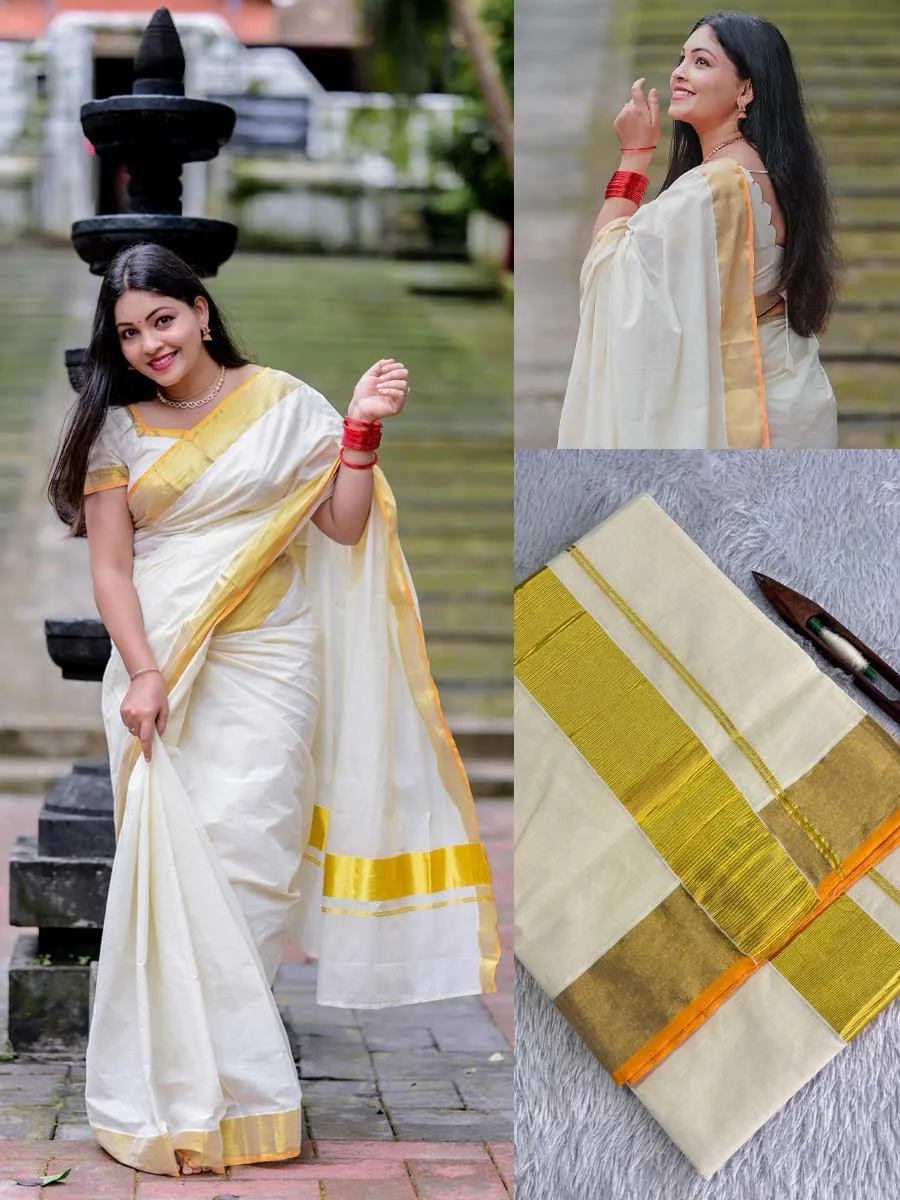
The quintessential Onam saree – off-white cotton with a golden or silver (kasavu) border, ranging from a slim line to broad, ornate borders.
What to look for:
- Zari quality – Real zari (gold or silver-coated thread) has a rich, slightly muted shine and feels slightly heavier. Imitation zari looks overly bright and can fade after a few washes.
- Border width – Broader borders (4–6 inches) offer a more festive, statement look, while slim borders (1–2 inches) are elegant and versatile for everyday festive wear.
- Weave density – Run your fingers across the fabric. A well-woven Kasavu saree feels smooth, sturdy, and even, without loose threads.
- Pallu design – Traditional temple borders, floral motifs, or peacock designs on the pallu indicate authentic craftsmanship.
Best for: Traditional Onam sadya, Thiruvathira dance, family gatherings, and Pookalam-making mornings.

Kerala Cotton Sarees
A broader category of pure cotton sarees from Kerala, sometimes with colored borders or subtle prints, offering more variety than the classic kasavu.
What to look for:
- Fabric weight – Lighter cotton (80s–100s count) is airier and ideal for Kerala’s humidity, while heavier cotton offers more structure and drape.
- Colorfastness – Check for dyes that don’t bleed; a quick rub test with a white cloth helps spot poor-quality dyeing.
- Finishing – Neatly finished edges and even hemming are signs of good tailoring.
- Comfort – Since these are worn for long hours, prioritize breathability over heavy embellishment.
Best for: Daytime events, office Onam celebrations, and casual family functions.
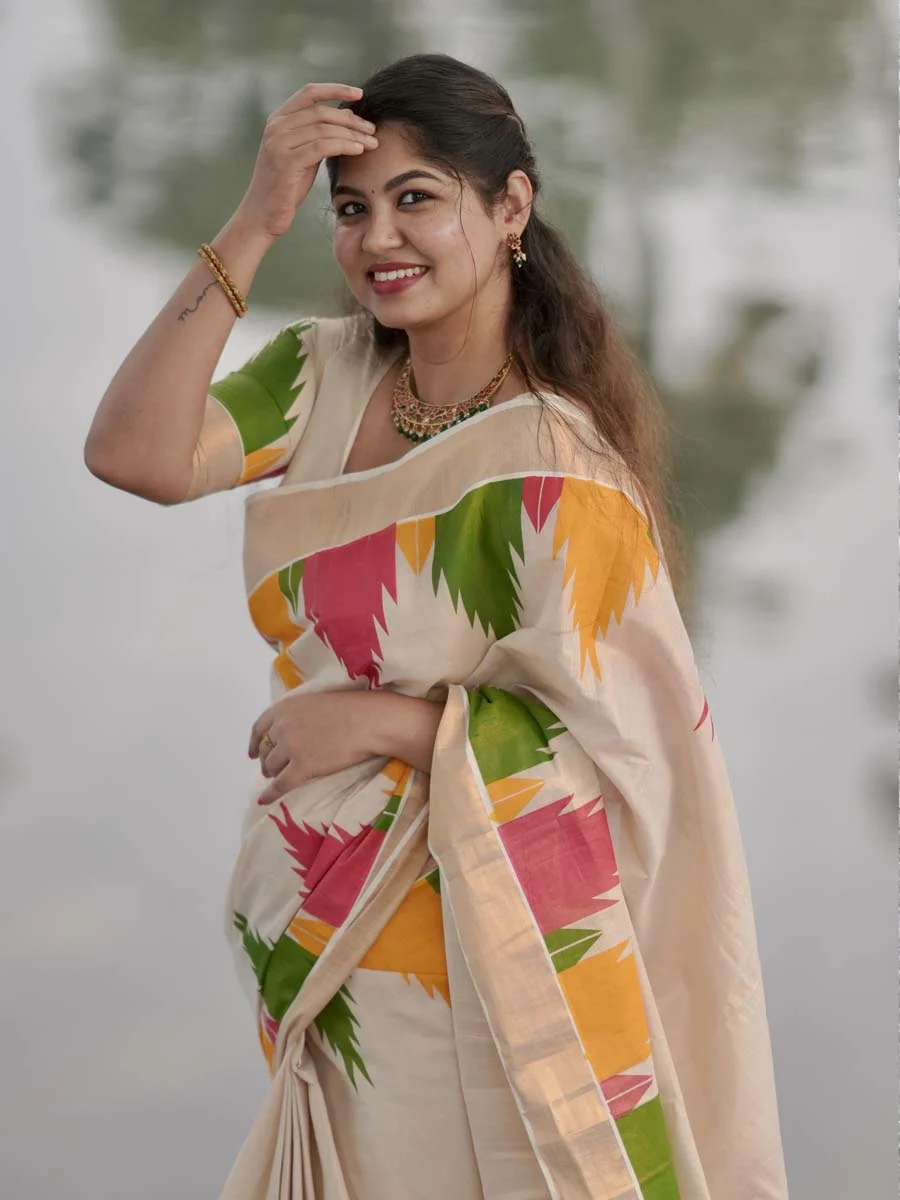
Tissue Sarees
Sarees woven with a fine silk or synthetic tissue thread blended into the fabric, giving a subtle shimmer while retaining the traditional off-white and gold aesthetic.
What to look for:
- Shimmer intensity – Tissue sarees have a soft, silvery-gold sheen. Choose a subtler shimmer for daytime events and a richer one for evening functions.
- Drape – Tissue fabric tends to be more fluid than pure cotton. Check that it drapes well without feeling stiff or slippery.
- Blend composition – Confirm whether it’s a cotton-tissue or silk-tissue blend, as this affects both comfort and price.
- Care requirements – Tissue sarees often need gentler washing or dry cleaning, so factor this into your decision.
Best for: Evening celebrations, receptions, and those wanting a slightly more glamorous take on the traditional look.
Buying Guide: How to Shop for Onam Sarees Online
Shopping for a saree online can feel tricky when you can’t touch the fabric — but a little know-how goes a long way.
Check the fabric description carefully. Look for specifics like “100% pure cotton,” “handloom,” or “real zari” rather than vague terms like “traditional fabric.” Reputed sellers will always specify fabric composition.
Zoom into product photos. Good listings include close-up shots of the border, pallu, and fabric texture. Zoom in to check the zari work and weave quality before deciding.
Read verified customer reviews. Reviews with photos are gold — they show you how the saree actually looks and drapes on a real person, not just on a mannequin or model.
Confirm saree dimensions. Standard sarees are about 5.5 to 6.5 meters long. If you’re petite or tall, check the length and blouse piece details to avoid alteration hassles later.
Look for return and exchange policies. Since color and texture can appear slightly different on-screen, choose sellers offering easy returns in case the saree doesn’t match your expectations.
Order early. Onam is a peak shopping season, and handloom sarees especially can take time to ship. Ordering 2–3 weeks in advance ensures you get your preferred saree without last-minute stress -and gives you time for blouse stitching.
Check blouse piece inclusion. Many Onam sarees come with an unstitched blouse piece. Confirm this in the product details so you can plan your tailoring in time.
Compare pricing with fabric quality. Handwoven kasavu sarees with real zari are naturally priced higher than power-loom or imitation-zari alternatives. Don’t just chase the lowest price – compare what’s included.
Frequently Asked Questions
Q1. What is the difference between a kasavu saree and a regular cotton saree? A kasavu saree specifically refers to the traditional off-white cotton saree with a gold sari border, rooted in Kerala’s textile heritage. Regular cotton sarees may come in various colors and patterns without this defining gold border.
Q2. Is real zari very expensive? Sarees with genuine gold or silver-coated zari are pricier than those with imitation (synthetic) zari, but they last much longer, retain their shine, and are considered heirloom-worthy. Cutique offers options across both budgets, clearly labeled for transparency.
Q3. How do I take care of my Onam saree after the festival? Hand wash or dry clean cotton and tissue sarees separately, especially for the first few washes, to prevent color bleeding. Store them wrapped in a soft cotton cloth, away from direct sunlight and humidity, to preserve the fabric and zari.
Q4. Can I wear a kasavu saree for occasions other than Onam? Absolutely. Kasavu sarees are versatile and are commonly worn for weddings, poojas, Vishu, and other traditional or festive occasions throughout the year.
Q5. What blouse styles pair well with Onam sarees? Traditional gold-bordered blouses, contrast-colored silk blouses (in shades like maroon, green, or mustard), and simple elbow-length sleeves are popular choices that complement the classic off-white and gold saree beautifully.
Q6. How do I choose the right saree if I’m shopping online for the first time? Start by deciding your budget and occasion, then filter by fabric type (kasavu, cotton, or tissue). Read the product description thoroughly, check reviews, and don’t hesitate to reach out to customer support for fabric or sizing clarifications before purchasing.
Q7. Do Onam sarees come pre-stitched with a fall and edging? This varies by seller. At Cutique, we mention fall and edging details clearly in each product listing, and we also offer saree fall/edging services on request for a ready-to-wear finish.